The Last Dragon

Dragons have always captivated me. From an early age, I was enamoured with them to the extent that they decorated the walls of my bedroom. In my tireless quest for entertainment, I discovered something on Youtube that I wanted to share with you all – the pseudo-science of how dragons might once have actually been real. an

Part Mock-u-mentry, part exploration of myth, the video delves into the possible origins of ‘real dragons’.

Is this sort of content useful? Did you enjoy the video too? Let me know with likes, comments and follows.

As an aside, I’ve been having some issues with alerts for blog posts. Be sure to click the link to my blog feed to see essays on the origin of orcs, a review of Malus Darkblade, and a look into how to make monsters feel more monstrous!  Hope to see your comments, likes and shares!

Let’s Review: The Demon’s Curse – A Tale of Mauls Darkblade

Published in 2005, the Daemon’s Curse is based on the original Malus Darkblade story presented in issue one of Warhammer Monthly (March 1998).

I have had the series on my shelves, collecting dust, for the last few years – though the books themselves are well thumbed. I have read the tale at least three times that I can recall. I like the dark elf antihero much more than the tales of Drizzt Do’Urden by R. A. Salvatore.

I picked the books up again recently, really on nothing more than a whim. I wanted to review a fantasy book and my hands strayed towards Drizzit… but my eye rested on Malus.

I guess the Darkblade won.

There are a good number of die-hard reviews online for this book, and some very negative (if less verbose) reviews too. My guess is this tale is a bit like Marmite- you either love it or hate it. Amazon gives it an aggregated four star review, Goodreads a three and a half. And for sure, this novel is a very good read, but it isn’t flawless. Let me elaborate.

Good Point: Novices welcome

With the novel telling the tale of a character in the Warhammer world, one might expect you needed to have some inside knowledge of the place, the game, the setting, to enjoy the book. This is true of novels based on film franchises, game console series or tabletop war games. Abnett and Lee make sure this is not the case in The Daemon’s Curse. The world building is amazing in this book – as it is in all Abnett books – so much so that it could easily be read by someone not at all familiar with the wider lore and cannon, and enjoyed.

But even better than that, the book builds upon what is cannon in the setting too, so there are new aspects for in-the-know readers. Such things as the Shades in the hills, the way the undead work in Naggaroth, Land of the Dark Elves. The political structures are developed far beyond the scant details of existing cannon too.

Good Point: Captivating Main Character

Malus Darkblade – there is no way of saying this nicely – is a bastard. He’s evil. He should be an antagonist in someone else’s story. But it is true to say we, as readers and consumers of fantasy, fall in love with the bad guys. Look no further than Golem in Lord of the Rings, or Zuko from Avatar:, or Darth Vader from the original Starwars trilogy.

I think Malus might be the main sticking point for many readers who were looking for some sort of redemption tale, like Drizzt. Malus is a mean, loathsome protagonist all the way through the series. He takes slaves, plans fratricide and patricide, has an incestous relationship with his sister, murders those loyal to him. He’s just vile.

But also… He is compelling. To paraphrase David Corbett, writing in April 2011:

Compelling characters need:

– a driving need, desire, ambition or goal;

– a secret;

– a contradiction;

– and a vulnerability.

How to Craft Compelling Characters

Malus Darkblade has that driving need that fuels the whole book with impetus to the end. He has a secret, one that others are party to, which he is running from before it is discovered. He is a contradiction – a powerful Dark Elf lord who must suffer the hardships of the narrative; a hero, perhaps, but not to humanity. Does he have a vulnerability? Perhaps, but only as a means to make his drive all important.

Good Point: A cast of fun, colourful and interesting characters.

Nagaira, Lhunara, Delvar, the Urhan, Kul Hadar – nobody can deny these characters are not interesting even if we see them in only in light of the roles they play in the narrative. Lhunara’s backstory is hinted at, eluded to, but never explicitly given. There is a subtext around Nagaira suggesting she and Malus have an intimate sexual relationship we never see, and that she is an illicit sorceress – which is implied but never actually stated.

Good Point: Abnett’s Style

I don’t know if I have said this before, but Dan Abnett has a writing style I strive to be as good as. He is a masterful storyteller and his tales are action-packed and engaging. I’ve never read an Abnett novel and not got to the end. He’s great.

Good Point: You feel like you are reading about Dark Elves.

I started to read a book called Orcs by Stan Nichols recently and put it down because the orcs were too human – they were not orcs at all save for the way they looked. Abnett has nailed the feel of a Dark Elf in his story. You cannot confuse them for humans at all – they have a character all their own.

BUT (there had to be a but)

Have you seen Mad Max: Fury Road? The entire story is a series of physical dialogues where the characters argue but as action scenes. Trust, friendship, forgiveness – these things are reflected physically in what could be described as a two hour action scene.

The Daemon’s Curse takes a different tack with fight scenes – and sprinkles them throughout the story. There are definitely filler fights – like the conflict in the tower: the spiders and the monsters that emerge before Malus gets what he wants in Uriel’s tower are nothing, low-stakes fights. Much the same is true in the Wighthallows and in the conflicts with the Beastmen. In short, some of the fight scenes would not have changed the story if they hadn’t been there – they simply serve to up the word count.

I don’t know why this is. Abnett does not normally put unnecessary filler in his books. Look at Gaunt’s Ghosts, the Eisenhorn series, or even Embedded. Much like movies can be spoiled with studio interference, I have to wonder if Games Workshop, the company behind the Warhammer World, didn’t play some part in this. Could they want spiders in as a metaphor for Malus being better than Drizzt? Surely not.

What was worse, though, for those of us who had read the Warhammer Monthly series of Malus Darkblade, we knew he couldn’t die. And yet, in conflic after conflict, it was his life at stake. We knew the outcome before we’d finished the opening paragraph of the fight – Malus survived. With no stakes, these filler combats become a chore to read.

There are ways Abnett could have got around this. There could have been something along the lines of a love interest with Lhunara, one of Malus’ closest retainers, and the stakes could have been her life. This would have given the readers something to care about. Neo is the star of the Matrix, but we still care what happens to Tank, for instance. The Daemon’s Curse did not do this, and I think is poorer for it.

That said…

The Daemon’s Curse is a damn good book all in all, and a fun read that makes me want to read the next in the series. This is one of those classics that will slide into obscurity outside the small circle of Malus Darkblade fans and I think that is a shame. For all the books’ flaws, there is a lot of good still to be read inside it.

I hope you’ve found this review interesting. Malus Darkblade is 21 years old now and deserves some recogniton that the likes of Drizzt gets. And he is unapologetically an action hero all the way.

Sorry Drizzt, I’m a Malus fan.

Please like, reblog, share, subscribe, follow and comment!

The Origin of: Orcs

They wage war across Middle Earth, servants of Sauron; they build alliances with demons, then shirk them to build a political dominion over the World of Warcraft; they serve deities and try to remember their heritage in Skyrim; they haunt the mountains and wild places, fighting among themselves until the day comes that a leader unites them to plunder human settlements in Warcraft. They are the orcs.

But really, who are they? Where did they come from?

Daniel Greene, a Youtuber and specialist in reviewing fantasy fiction, claims that orcs arrived in our collective unconsciousness from the work of J. R. R. Tolkien, in his magnum opus, the Lord of the Rings (see the bottom of the article for links). And while he may have a point about there being no ‘orcs’ as we would recognise them today before that, he has missed some important clues I feel.

Apart from writing the Hobbit, the Lord of the Rings and other tales, Tolkien was a linguist. He spent years developing the language the elves spoke in Lord of the Rings. He translated Beowulf into English. He was not just a student of language, not just a doctor of it, but a professor of ancient languages. Words were his passion. And as someone who could speak multiple languages, he could draw from those to inform his choices in fantasy fiction.

He was almost certainly aware of the Roman god, Orcus, who ruled the Underworld. And as a Professor of Anglo-Saxon, he knew that orcneus meant a monster in those tongues. He knew than, at a time when the bow was being replaced with pikes and muskets, the word orc derived from either of these roots and had become a synonym to ogre in common parlance.

If one were to google, they might also discover:

Orc is from Old English orcneas, which appears in the epic poem Beowulf, and refers to one of the races who are called the offspring of Cain during the initial description of Grendel(“Þanon untydras ealle onwocon,/eotenas ond ylfe, ond orcneas”, ll. 111–112). In a letter of 1954 Tolkien gave orc as “demon” and claimed he used the word because of its “phonetic suitability”—its similarity to various equivalent terms in his Middle-earth languages.[1] In an essay on Elven languages, written in 1954, Tolkien gives meaning of ‘orc’ as “evil spirit or bogey” and goes on to state that the origin of the Old English word is the Latin name Orcus—god of the underworld.[2]

Wikipedia – Orc (Middle Earth) entry, current on the 2nd September, 2019

The Hobbit was published in 1937 but even then, the Orcs that we know and love didn’t quite exist yet. However, the word ‘orc’ does appear in the name of the Goblin Cleaver, the sword found in the troll cave. It is called Orcrist in the language of Gondolin. In no other part of the Hobbit is the word ‘Orc’ used for any race.

In 1954, the first instalment of the Lord of the Rings came out and poor Boromir was killed, and Orcs cemented themselves in the public unconscious form that point on.

And Since Then?

The orcs’ origins lie within the mind of a brilliant professor of languages and the receptive readers who devoured his novels and clamoured for more. But how have they changed since their initial conception in the Lord of the Rings?

Clearly, they began life as mooks a.k.a. red-shirts, a.k.a disposable extras in fiction and in games such as Dungeons and Dragons. They were the epitome of the Other, the barbarians at the gates, the monsters who fought for the evil empire. But as time has worn on, there has sprung up a revisionist view of the race.

The TV Trope: ‘Our Orcs are Different’ best describes this. Where the antagonistic orcs are largely as Tolkien wrote them, even when they are the mind-controlled Urgals of the Inheritance cycle or the fierce warbands of the Warhammer universe, the revisionst orcs are different. They aren’t human (Unless you’re reading ‘Orcs’ by Stan Nichols, then they might as well be) but they are much more likable. The TV Trope site describes them as Warcraft Orcs, which if fair, as Orcs in Warcraft III and in the subsequent titles were much more ‘potagonist’-y.

So where will they go next?

Orcs are changing as our perception of race changes. Tolkien was writing at a time when the British Empire was sill ‘a thing’, and a certain superior mindset had settled on some sections of society. We are more careful of race now. The recent film, Bright, tried to use fantasy races as an allegory for racism in the modern world and I wouldn’t be surprised if there is a sequel already being written (by monkeys using chainsaws on a bunch of dictionaries). Amazon (I believe) is making a TV show based in Middle Earth. With the recent popularity of Bright, I would not be surprised if one of the main characters was an Orc (and probably sexy in some way, shape or form).

The revisionist orcs are here to stay – indeed they are becoming the more popular view of the orc race. In the end, we may find some fusion of ‘the Other’ and ‘a culture with its own intrinsic value’ that becomes more mainstream than it seems to be currently.

One thing is sure, though. Orcs are here to stay.

Key Sources

Daniel Greene’s Orc video – I didn’t see this until AFTER I’d written my article and I was forced to go back and re-write it in response. Thanks Daniel! He does a great job of describing the orcs of both flavours in his video and it is well worth a watch.

The TV Tropes page gives a great academic breakdown of both flavour of orcs and illustrates them with an exhaustive list of examples. Well worth checking out too! https://tvtropes.org/pmwiki/pmwiki.php/Main/OurOrcsAreDifferent

What Will The Monsters Do When They Win?

In Shad’s review of an anime called Goblinslayer (I’ve never seen it), he talks about the necessity of showing how monstrous the monsters are in fantasy. The comment is part of a larger discussion on the way that various fantasy authors and writers have managed this in various media. From the entire video, which I’ve included below, the question of ‘What will they do when they win?’ stuck with me.

In Goblinslayer, the consequences for women being captured by hordes of Goblins are particularly horrific – to the point where I’m not going to describe them here. In Lord of the Rings, we’re shown the possible consequences of being captured by orcs when Grishnákh demands to eat Pippin and Merry on the fringes of Fangorn forest; and Frodo sees the Shire destroyed by servants of Sauron when he looks into the mirror of Galadriel. In the Hobbit, Bilbo sees what will become of him at the hands of Golem, the Spiders of Mirkwood and the Trolls.

Why is showing this to the reader important? Well, quite simply, demonstrating the consequences is the easiest way of showing the reader the stakes of a given conflict. I discussed this idea in my short essay, An Essay of Consequence. Essentially, if the monsters win, these bad things will happen.

Dan Abnett, perhaps my favourite author, has a particular technique he uses in his writing to demonstrate what happens when the bad guys win. It is a method shared by many writers, I am sure.

They reached the second ward in minutes. Nagaira stopped at the threshold and put out a warning hand to Malus as he approached. ‘Send another through,’ she said. ‘I don’t care who.’

Malus turned to the first retainer who caught up with them, one of his own druchii named Aricar. ‘Go!’ he commanded, pointing at the doorway, and without hesitation the warrior dived through.

The maelithii pounced on Aricar just on the other side of the door. …

Aricar staggered as the spirits sank their obsidian teeth into his face and neck. He spun, hands lashing at empty air, but Malus could see the skin around where the spirits bit turn bluish-grey, like a corpse left out in the snow.

‘Now!’ Nagaria shouted. ‘While they are feeding! Run!’

The Daemon’s Curse – A tale of Malus Darkblade, by Dan Abnett and Mike Lee, page 106-107

Did you see it? Even in this short passage we see what happens if the monsters, the maelithii, win! Now, read the same passage without the penultimate paragraph and note how much weaker the conflict seems. The stakes make the conflict more compelling.

I recommend watching the video from Shad of the Shadoversity and I’ve dropped it at the bottom of this post. I also highly recommend reading my blog post, An Essay of Consequence and the article that inspired it, How to Write Stakes in Storytelling.

As ever, I would love if you liked, commented, shared or reblogged this.

The Death of Smaug

In my brief skitter through YouTube at the weekend, I stumbled across this gem of a video. As some of my longer followers might remember, back in July, I reviewed the Hobbit. So, while still fresh in my mind, I came across this gem from Hello Future Me, an animation of the part of the story where Smaug is killed by Bard.

I haven’t seen the second or third Hobbit movies, so I had to hunt for a video to compare it to. I’ve included the footage… but I’m not sure it as as compelling. I mean, the villain even gets to monologue.

When I saw the animation by Hello Future Me, I knew that I had a higher opinion of it than the first installment of the Hobbit. This is despite the fact that I have reread the Hobbit as recently as May of this year. I think part of the reason why is that the stakes are not so convoluted in the animation – the movie cuts from one conflict to another with Bard’s son somehow involved. There is no Thrush either, a character who relays Bilbo’s findings about Smaug to Bard, and this the main protagonist has some agency in the death of the dragon. Why do I find the film disingenuous where the animation works so much better?

Who do you think did this better, Jackson or Tolkien? Let me know in the comments below.

How to make a map using Inkarnate

In my current work in progress, Kingdom of the Lion, I have been getting very involved in writing the tale of Pryad as he turns from a powerless street urchin from the dark alleys of Ur into something else much more powerful. But in doing so, I’ve found some not-at-all-useful historical maps of the Fertile Crescent. Each one looks different, puts cities in different places, spells them differently and just muddies the waters for someone trying to set their fantasy novel in humanity’s ancient history. Damn you, Archaeologists!

So, may I present the map I’m using as the bare-bones of the world I am writing about in Kingdom of the Lion. Some of the locations are based on the historic sites of the ancient cities of Sumeria, Akkadia and Babylon. I’ve also added places such as the Sargon forest, the Teeth of Tiamat, Apsu’s Tears and the Ghul desert. I used the Akkadian names for the Tigris and the Euphrates, as well as adding Enoch and Nod (which I couldn’t find as historically placed using Google – so they are mine now).

I used Inkarnate– a free online map creation tool that I often use to make maps for Role Play Games or to pootle about in for fun. I may go back to the tool to edit, adapt and change the map later on as the story unfolds.

I highly recommend Inkarnate as a tool for fantasy writers. There are many paid-for mapping tools but this site has a simplicity that makes it easy to use and allows for mastery early. I think you can agree that the end results are pretty high quality.

If you needed a guide to use the site, I’d recoomend WASD20’s video on Youtube, which I’ve included below:

Let me know how your mapping goes! Maybe send them to me so I can share them on the blog, if you like.

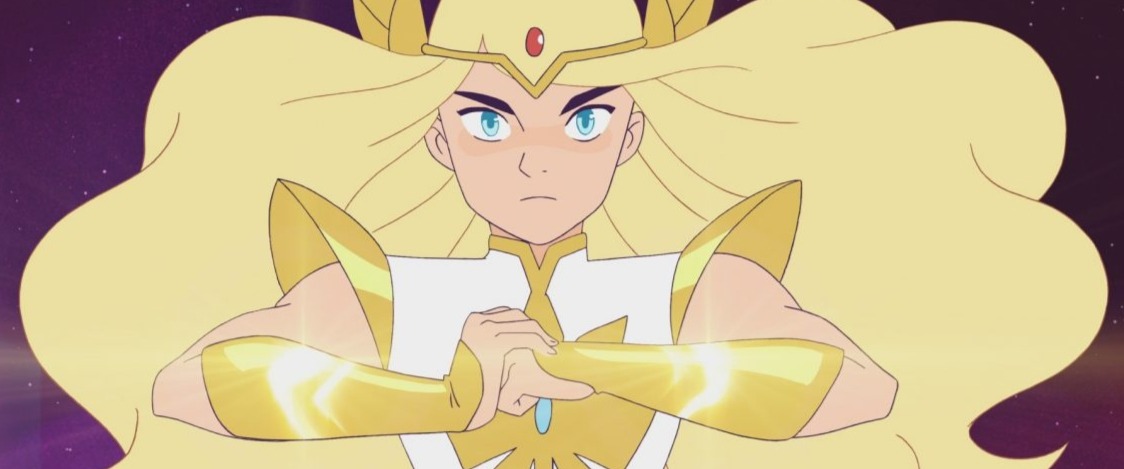
Lets Review: She-Ra and the Princesses of Power (I promise I’m over 18!).

This review has been sitting in my drafts folder for over a week, waiting to be finished. This has turned out to be harder than I envisioned for a couple of reasons. First, the completed draft doesn’t seem to have saved for whatever reason – a pity, but not the end of the world. Secondly, though, there seems to be a great deal of debate and drama over this fantasy kids’ show.

Drama? Well yes. The new seasons of She Ra on Netflix seem to have garnered some hate – not only for changing the aesthetics of the characters but also for some perceived homosexual subtext. I don’t really want to go down that rabbit-hole. My personal point of view is that any show in the 21st Century should be representative of a diverse demographic. If people want to claim She Ra as an image of power for their sexuality, race, gender or whatever, then that is really their prerogative. Once a book is written, you can’t start telling people how to see your characters of how they should make them feel. This feels like the French cinema idea of ‘Death of the Author‘ – that people’s interpretation is as equally valid as the authors at the end of the day.

So, leaving all the haters behind, here are five things that I love about the last three seasons of She-Ra and the Princesses of Power.

#5: A Coming of Age Tale

One of my favoutite type of stories is a ‘Coming of Age’ tale and She-Ra is definatly one of those. Adora has to grow into her power. Bow has to come to terms with letting down his fathers (oh, yes, the Homosexual content isn’t all subtext – but don’t we have Homosexual couples in the Western World now?). And Glimmer has to step out of the shadow of her father’s death and earn her mother’s respect.

More please! Love this trope!

#4: Diversity

Showing off my liberal bias here, perhaps, but as someone who has lived in a multicultural city in England, and then in multicultural city in the Middle East, it is always a little weird to see a ‘whitewashed’ show. More so when everyone is heterosexual and white (and presumably Christian). I think as writers of fiction in whatever media, we have a duty to provide characters to which consumers can relate. Difference is a part of life and a fact we should embrace.

So, I am very happy to say that the new She-Ra contains none of the White-Woman-Clones that the original show did. The children in the show look like kids and don’t suddenly morph into 20-somethings with chainmail bikinis any more. A variation in body-types is depicted, in race, in character. The show writers nailed this.

#3: She-Ra and the Solar Exalted

Okay, so most of you have no idea what I am talking about here but, She-Ra is totally a Solar Exalt from the game ‘Exalted’ published by Onyx Path Publishing. Exalted is a table-top roleplay game and a simple google search will help anyone who cares enough to find out more. As it happens, I love the Exalted RPG, so if you fancy running a game, let me know 😉

#2: Catra

I am in love with Catra. She is a great antagonist with great motives and a sense of real danger. The stakes between her and Adora are high and keep escalating. She is drawn well, she is voice-acted well. She is written well. She is my favourite character in the whole show.

#1: Friendship is Magic

Wait! Wrong show! Okay, but the key theme of She-Ra is friendship and being a good friend. It slides into the supposed new genre, Hopepunk, really well. The theme is so ingrained that even Horde (the big bad) needs and values friendship. With the world as it is now, I think we could all do with a little more hope in our fiction.

In conclusion…

She-Ra and the Princesses of Power is a good show for kids. I started watching it with my 3 year old daughter and though she lost interest, I’ve been following the show since. I can’t very well put Lord of the Rings on when she is around, after all.

She-Ra is aimed at that middle band of children, 6ish to about 9 or 10, but it does have wider appeal. it isn’t always the most cleanly animated, but it is episodic and the character arcs are fun. Even Madam Razz, a character I would normally have some issues with, is entertaining to watch.

If you have some spare time, and need something PG to put on in the house, I’d recommend She-Ra.

How I Created a Magic System in Six Easy Steps

As part of my avoidance strategies to prevent myself from finishing my manuscript in a reasonable amount of time – ahem – I mean as part of my research – I stumbled across an article form the Well-Storied blog. (link at the bottom of the post). The article was really well written and made me think twice about how I am using magic in my own work, the Kingdom of the Lion.

The author of the article, Kristen Kieffer, lays out six steps to creating a magic system – her article goes into detail about them but for ease, I’ll list them here:

  • Define the use of magic in your work
  • Identify the users of magic
  • Outline the limitations of magic
  • Establish the dangers in using magic
  • Explore the origins of magic in your work
  • Consider how magic impacts the culture it exists in

These sorts of questions generate what Brandon Sanderson, one of the great contemporary fantasy authors, would term a ‘Hard Magic’ system – a system of magic where there are hard and fast established rules. This is what I want to include in Kingdom of the Lion in order to highlight some of the central themes touched on by the story.

So, without further ado…

The Magic of Ancient Sumeria

Step one: Define the use of Magic in Ancient Sumeria:

Magic in Ancient Sumeria, in Kingdom of the Lion, is a transactional process involving contracts. Essentially, a petitioner writes in cuneiform on a clay tablet detailing what they want and what they are willing to give for it to a god who deals in some element of the miracle they want. If a user of magic wanted a good harvest, they might ask Innara, goddess of fertility, to bless them in return for a number of sacrifices at her temple. A user of magic might seek Enki’s aid in punishing someone who slighted him in return for acts of worship.

The exact details of each deal would depend on the values and wants of the god or goddess and what the magician has to pay with. Ereshkigal and Innara want different things, value different services and are more likely to favour different people, for instance.

Once the magician has written their offer on a clay tablet, they cook or burn or fire it – the fire itself being a conduit of chaotic and chthonic power linking earth and heaven. Should the tablet break as a result, crack or shatter, then the god has not accepted the deal. If it survives the process, the god has agreed to the terms as written and awaits the transaction.

This makes the ‘fireball throwing’ type of magic alien to the setting, but making traps, wards, potions and the like much more possible. It also is an in-story explanation as to how such things as the Pyramids could be built: Using this system, a stone mason could have made contract with a god and perhaps made stone lighter, or people stronger in order to make the construction process easier.

In the first chapter of Kingdom of the Lion, the rich baker who is word-wise has enacted a scheme to protect his store from thieves. He baked a clay tablet to Innara promising riches should she help protect his goods from thieves and when he fired the tablet, it was unbroken. He baked the bread using the formulas ad rituals laid out in his tablet and set it as a trap. As soon as Pryad grasped it, the miracle took place and he was trapped for short time, allowing him to be beaten and captured and sent to the magistrate.

Step two: Define the Users of Magic

Though it is only touched upon in chapter one, in Kingdom of the Lion the users of magic in Ur are from the ziggurat. They are called magicians, or priests, and the key skills they use to employ magic are an understanding of literacy in cuneiform script as well as an intimate understanding and study of the nature of the gods and their preferences and demands as payment for their miracles.

I have outlined other users of magic within the world, however. Each city, to my mind, would be ruled by a caste of literate people who intercede on the peoples’ behalf with the gods. And even barbarian cultures use this system if able to learn the cuneiform script. Anyone who can write can use magic, however, making magic a very closely guarded secret in Ancient Sumeria.

Step three: Outline the Limitations of Magic.

In the system of magic, there are many limitations. Mostly, on the type of miracle that can be granted. There are none of the flashy fireworks of Gandalf or the wand-waving of Harry Potter for the Ancient Sumerians, oh no. Instead, spells create miraculous effects – such as bread that turns to lead around a thief’s hand, or stone that weighs as much as dried grass while the sun shines upon it uninterrupted. Longer lasting miracles could work though, such as spells that make a person know when someone is going through their private things, or a curse on all the cattle in a certain area.

Another limitation on the magic in Kingdom of the Lion is the clay tablets themselves – if they are broken, a contract is rendered null and void. This might make little difference to a magician, but if they have received the benefit with none of the cost, then usually the god who was ‘tricked’ will be a little ticked off.

Step four: Establish the Dangers of Magic

The real dangers in the use of magic in Kingdom of the Lion lies in the contract itself. If cheated, gods usually punish the magician severely along with those associated with them – friends, family, children, or their kingdoms. Depending on how annoyed the god is, these punishments can get pretty biblical.

The second danger is in wording the contract. If worded vaguely, the magic may not have the desired effect and could have unforeseen circumstances for magician… or even for the god. Enki himself has made use of this problem to bring ruin to many more foolish magicians simply because he could.

Step five: Explore the Origins of Magic

The way magic came into the world is pretty tame by some standards in Kingdom of the Lion. There has always been gods – because there was Tiamat and Apsu – the primordial chaos. These gods begat more gods in the creation of everything, and these gods have always been willing to help mankind out in return for favours and worship.

It was with the birth of Marduk and Ishtar’s son, Nabu, that the current practice of magic was born. Nabu is the god of words and letters, and of contracts, and he brought to humanity the system of contracts that is still used millenia after.

Since my system of magic isn’t part of Ancient Sumerian legend, really, I can have some fun with this and make up various myths to litter into Kingdom of the Lion to add depth to my world-building.

Step six: Consider how Magic Impacts on Ancient Sumerian Culture

Magic was important in Ancient Sumeria but literacy is not something everyone has access too – only a specific caste of people. The city-states of Mesopotamia were ruled first by priests and temple leaders, and this fits really well with the idea that they have protected and guarded their writing system for millennia.

But magic is also why humanity is making such progress – so although it is a closely guarded secret, it is also an industry that is seeing growth as each city-state seeks to increase its economic and military might.

In Conclusion

Reading the Well-Storied article helped me pin down the details of my current Work-In-Progress’ magic system, but it also had another suggestion to make aside from these six steps – that the magic should work as a vehicle for the theme. I think, in Kingdom of the Lion, one of the central themes is that everything has a price – a consequence if you will – and highlights the transactional nature of the world when Pryad is made a slave for being caught stealing. He pays for bullying Sarhu by being abandoned. Magic in the world is much like that – nothing is free.

What do you think of the magic system?

Any hints or tips on how to improve mine even further?

Any limitations I might have overlooked?


Source:

Well-Storied: How to Create a Magic System in Six Simple Steps

How J K Rowling Describes a Character

He had a lighting bolt scar on his head, with messy hair and thick glasses fixed in the middle with sellotape.

I didn’t look in a book or online for that description, I drew it from my memory whole as a description on Harry Potter. When you think about it, that is pretty amazing. I read the Potter series years and years ago, and although I’ve reread it in the last 5 years, It was way back in 2015. So how does Rowling write such vivid physical descriptions?

Who wore half-moon glasses in the series? Who had bushy brown hair? Which character had lank, greasy hair? Whose eye could look inside their own head? In each case, you can easily name these characters based on their unique (in the series) physical descriptions.

So how does Rowling leave us with these indelible characters? She adhears to a simple rule:

“If you want to write a physical description of your character that sticks with your audience, focus on the single most interesting characteristic, and build your character around that.”

P. S. Hoffman

Harry Potter had a lighting scar on his forehead – and the other physical descriptions of him begin with features adjacent to it. Dumbledore’s glasses, Snape’s hair, Mad Eye Moody, and even relatively normal Hermione Grainger with her bushy brown hair all had unique features. And those features didn’t just describe their looks. Hermione’s hair suggests she isn’t a girl who thinks beauty is the most important trait in a person. Mad Eye’s eye shows how paranoid he is. Snape’s hair is an indication of how Harry sees him. What Rowling is doing is describing the character physically, but also showing the reader what the character’s personality is like in some way, sometimes through Harry Potter’s eyes.

I’ve been trying to do this in my current work in Kingdom of the Lion. My main character, Pryad, has wild black hair that looks like a lion’s mane. Shadanar is the size of an auroch or oxen and Zababu has a face that looks fairly hawk-like. I have mentioned these once or twice in the first chapter, so how do I go on to develop and cement these descriptions in my reader’s minds?

Well, I shouldn’t let an opportunity to mention these features pass by. Rowling uses every opportunity to cement these descriptions in every scene that characters appear, especially earlier in the series.

I used to write descriptions of characters like a laundry list of normal attributes. Reese, the Main Character from my first (and as yet unfinished) novella, had a Burberry cap, tracksuit with a broken zip, and a narrow, weaselly face. Other characters were less descriptive than that – one having dark skin, curly brown hair and brown eyes. YAWN!

When you read a list like this: Height; Hair colour; Eye colour; Skin colour; Body shape; Mouth shape; Nose shape, fingernail shape, hair length, etc.


Does this actually help you visualise a character? Rarely.

P. S. Hoffman

P. S. Hoffman, in their great article about describing characters, points out that most readers skim over these sorts of lists, read the words, forget the words and insert their own ideas instead. And they should since there is nothing there for them to hang their imagination on to.

Ellen Brock opens her video with examples from Harry Potter and the Philosopher’s Stone quite independent of P. S. Hoffman’s advice. Ellen expresses the same or similar sentiments about one of the real strengths of J K Rowling’s craft.

What do you think of this advice? Do you have any hints or tips on describing your own characters in stories? Does it matter if you are writing a short story or a novel?

An Essay of Consequence

Cluck the image below and read the article –

September C Fawkes
Click me to visit Fawkes’ awesome essay!

September Fawkes has done an excellent job in this article about stakes in scenes and fiction. Reading it, I felt intense jealousy over the fact that I hadn’t thought of it first. The way she has parsed the ideas has made me reevaluate my own works in progress and made me think of several instances in books and in fiction that the stakes could have been more effectively used.

September suggests thinking of the stakes not as the risks, but as the potential consequences of failure. What could happen if the protagonist doesn’t act? What would it mean to them? When it comes to revising Kingdom of the Lion, I think I need to make the stakes for Pryad more explicit in the first chapter. Conversely, in my current WIP, I think the personal consequences are at least adequately clear because I express my stakes to the reader more or less directly.

When working with an established author I was introduced to from Facebook, I was recently told to raise the stakes in my scenes, to increase the risk to the protagonists. I struggled with this idea – how do I raise the stakes when they’re already pretty darn big. But with September’s take on them, it makes more sense: Increase the potential consequences for the protagonists, in scope, breath or severity. Either make the consequences worse, make the consequences affect more people or change what the consequences could be.

Another great feature of this essay is the way that September parses those consequences, similar in approach to an article I remember reading from Johnn Four, the RPG blogger when he discussed Dungeon World and loopy planning.  Using Kingdom of the Lion as an example, the stakes in chapter one’s first scene are:

IF Pryad doesn’t get some food for Malassa, THEN she might lose the baby. IF Sarhu stays with Pryad and helps him, THEN he could be captured and suffer the same fate as his ‘big brother’. IF Pryad doesn’t put up a strong facade, THEN he might be taken advantage of sexually in prison.

I really appreciate the way that this method makes the risks clearer and more precise, less ephemeral. I think this method is going to have a lasting effect on my plotting and writing.

What do you think of this approach? Let me know what you think in the comments below!


If you’re still drawing a blank about what conflict and stakes are, perhaps watch this video from Alexa Donne’s Youtube Channel: